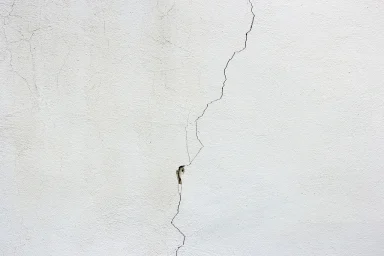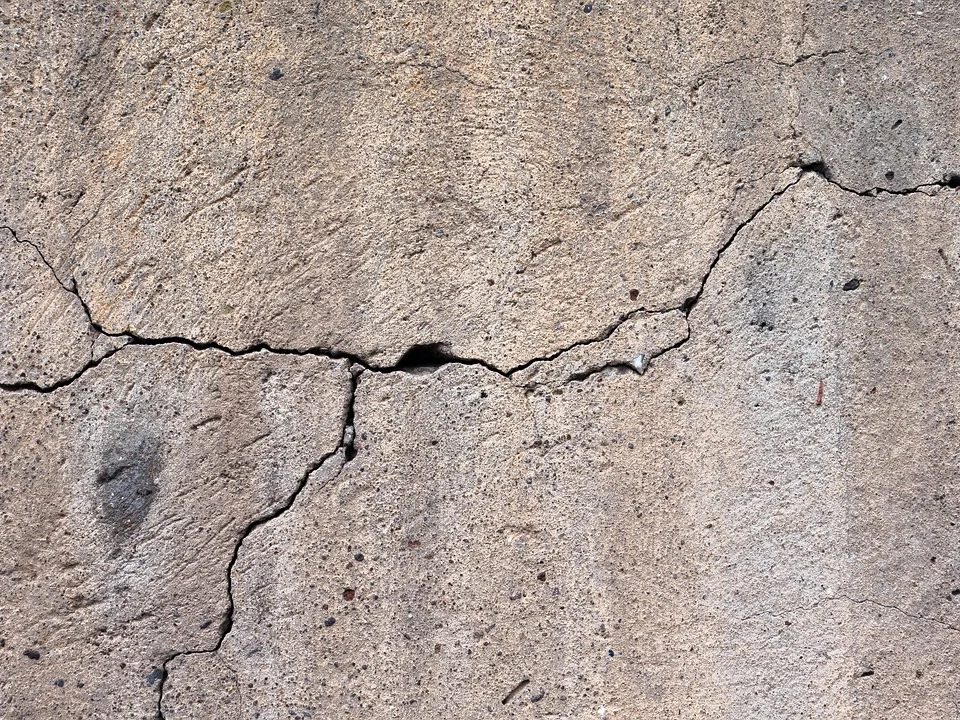
Worry about movement, not the crack itself. A horizontal crack, a wall that leans or bows, a crack with one side out of line, a crack that keeps growing, or a crack that comes with sticking doors and sloping floors goes to a structural engineer before anyone patches it. A thin, dry crack that hasn’t changed over several seasons mostly calls for a dated record.
Finding one is unnerving, but it’s common: University of Minnesota Extension says concrete and block foundations usually develop some cracks. “Usually” doesn’t clear yours, and no web page can. Here are the questions in the order they matter, with the full guide for each. Lowest Floor sells and installs nothing and refers no one.
Step 1: Decide how fast to move
Find the first row that matches. The rows run from most to least pressing. It chooses your next step; it isn’t a diagnosis.
| What you see | First step |
|---|---|
| A horizontal crack in a basement wall, or a wall that leans or bows | Structural engineer before any patch or repair quote |
| One side of the crack sits higher or farther out than the other | Structural engineer |
| The crack is getting wider or longer, or a patched crack has reopened | Structural engineer |
| A crack plus sticking doors, sloping floors or new drywall cracks | Structural engineer, though these signs can have other causes |
| The crack leaks, but the wall is straight and the crack isn’t changing | Treat it as a water problem first (step 5) |
| Thin, dry and unchanged | Keep a dated record and recheck through the seasons |
Some cases can’t wait for a booking. If a wall has shifted suddenly, or you can see it still moving, keep people away from it and call your local building department the same day. That’s our advice, extended from FEMA’s urban flooding guide (November 2024, revised May 2025), which says that after a flood you shouldn’t enter a building that appears structurally damaged, and should ask the department for a safety inspection.
If anyone sleeps in the basement, be ready to leave in heavy rain: FEMA warns that if an exterior basement wall collapses under outside water pressure, the basement can fill in less than a minute. And never go into a flooded basement with the power on. See first steps in a flooded basement, including why pumping too soon can push walls in.
Step 2: Look at the whole house
Most guides promise a simple key: this direction is fine, that width is trouble. No code, government guide or extension publication we could open gives a meaning for each direction, a safe width or a safe rate of movement.
Engineers explain why. The Texas Section of the American Society of Civil Engineers lists cracked concrete, cracked drywall and racked door frames among its visible signs, then says that seeing some of them doesn’t necessarily mean a performance problem, and that their importance can depend on the age of the house and earlier repairs. Those guidelines cover mostly Texas slabs and pier-and-beam houses, but the point carries over: a crack gets weighed alongside everything else.
The same goes for the 1/8 and 1/4 inch rules you’ll see online. Most of the numbers we could trace measure something else. New Jersey’s 1/8 inch is a new-home warranty standard, and HUD’s 1/4 inch by 12 inches long is an inspection deficiency in HUD-assisted housing. Neither is a safety limit for an existing house, and neither clears a thinner crack.
So take a slow walk with a flashlight. When foundation cracks are worth worrying about has the five-stop walk-through, what changes on slabs and crawl spaces, and the full table of width numbers.
Step 3: Read the direction, carefully
A crack’s direction tells you which question to ask, not how serious the crack is.
- Horizontal. Engineer first. Go to step 4.
- Vertical. Installers mostly call these shrinkage. North Dakota State University (NDSU) Extension’s undated flood sheet ties vertical cracks to settled walls and footings. It may be either one.
- Diagonal from a window or door corner. In poured walls, the National Ready Mixed Concrete Association, a trade group, puts these down to shrinkage.
- Stair-step, in block or brick. Installers treat these as a sign of movement. No code, agency or extension source we read says what one means.
- Web-like. The concrete association links surface crazing to poor curing. Around Stafford Springs, Connecticut, though, a 2024 copy of the state housing department’s page listed web-like cracks among the most concerning signs of failing concrete poured from 1983 to 2015.
Several kinds of crack on one wall deserve more attention than any one alone. Our guide to what a crack’s direction can tell you sets out who says what about each pattern, plus eight checks you can do with a tape, a phone and a pencil.
Step 4: Horizontal cracks and bowing walls go to an engineer
A basement wall holds up the house and holds back the ground. FEMA says cracks “could indicate existing damage due to lateral earth pressure” on the outside of the wall, and that some older homes have unreinforced basement walls that can buckle or collapse. NDSU’s sheet lists horizontal cracking and sections out of vertical alignment as signs of a buckled wall.
That isn’t a verdict. A horizontal crack in a basement wall may be decades old and stable, or the wall may be bending, and you can’t tell which from the crack alone. Bowing basement walls covers urgent signs, what not to do yet and how to measure a bow. We can’t give an acceptable number, because no public source we read gives one. Don’t brace, jack or inject the wall yourself, and don’t cover it up.
Who you ask matters. A home inspector can flag a crack, but the American Society of Home Inspectors’ standard doesn’t require an opinion on whether structure is adequate. A repair company can price a repair, but it sells the fix, so its visit isn’t an independent inspection. For cause, risk and whether repair is needed at all, ask a licensed engineer who won’t do the work. NCEES lists the state licensing boards, so you can check a license.
Step 5: Move the water
If nothing above sends you to an engineer, deal with the water around the house next. The concrete association says to check drainage, and correct it if needed, before repairing a leaking crack. Minnesota Extension’s order of work is to control moisture sources inside, stop ventilating with humid summer air, correct grading, gutters and downspouts, and only then consider a drainage system.
- Downspouts. Minnesota Extension says to extend them at least 4 feet beyond the wall.
- Grading. The 2024 International Residential Code, R401.3, gives 6 inches of fall in the first 10 feet. It’s a model code, so check your local adoption. Our foundation slope calculator compares your yard with the published figures.
- A bowed wall. Gutters can start today, but ask the engineer before adding soil against it.
If water is coming through the crack, see where a leaking basement wall lets water in.
Step 6: Repair last, and know what it’s for
Before anyone talks materials, you need three answers: is the crack moving, is it letting water in, and is the goal to stop water, restore strength or both? The Bureau of Reclamation’s Guide to Concrete Repair, written for dams and canals rather than houses, treats polyurethane as a way to seal leaks and epoxy as a way to bond concrete back together, and neither removes the cause.
FEMA says sealing is usually work for specialty contractors, who can also verify that the wall can resist any extra water pressure outside it. No primary source we read matches a repair method to a type of crack in a basement wall, so we don’t either. Don’t fill a horizontal, offset or growing crack before an engineer sees it: a patch hides the evidence, which is our reasoning.
Our guide to foundation crack repair explains what each method is meant to do, what you can do yourself and what a quote should say. Our sister site CostPlain breaks down what foundation repair costs.
Keep a dated record
Whatever else you do, leave the crack visible and start a record. EPA’s moisture guide, written for larger buildings, says to look for changes in existing cracks and for new ones, twice a year and after heavy rain or rapid snowmelt. No source sets a method, so the routine is our suggestion: photograph the crack straight on with a tape in the picture, make a small pencil tick at each end, write the date beside it, and note whether it’s wet.
If the crack runs past a tick or clearly widens, go back to the engineer rows in step 1.
General information, not engineering, legal, insurance or medical advice. A licensed engineer who has seen your wall decides what it needs.
Sources checked on 4 November 2026.