A sump pump sits in a pit in the basement floor. When water rises in the pit, a float starts the pump, and the pump pushes the water up a pipe and out of the house. Most problems show themselves with a look in the pit and a look at the end of the pipe. This guide covers how it works, what goes wrong, size, backup, upkeep and where the water may go.
If water is on the basement floor, stop here. Don’t walk in with the power on. Iowa’s health department says to turn off the electricity first, preferably at the meter, and to call the utility if you can’t do that safely. Then go to what to do when the pump fails and the basement floods.
Lowest Floor sells and installs nothing and refers no one. Models named here are examples from their makers’ sheets, not a ranking. Your manual comes first.
How a sump pump works
Water reaches the pit through drain pipes or the basin sides. Five parts do the work:
- The pit. The 2024 IRC (P3303.1.2) asks for at least 18 inches across and 24 deep unless otherwise approved. It’s a model code, so check your local adoption.
- The float or switch. It turns the pump on as water rises and off as it falls. On the Zoeller M53, one example, that’s 7-1/4 inches and 3 inches. Ann Arbor calls a stuck switch the most common mechanical failure.
- The pump. Flow falls as lift rises. Zoeller’s catalog lists that same model at 43 gallons a minute (gpm) at 5 feet, 34 at 10 and 19 at 15.
- The discharge line and check valve. The same code section (P3303.1.4) calls for an accessible full-flow check valve. If it fails, pumped water falls back into the pit and each cycle moves less.
- The vent hole. It lets trapped air out, so the pump doesn’t run without moving water. Some pumps have one built in, so read your manual before drilling.
FEMA’s urban flooding guide says sump pumps aren’t designed for large volumes of water and don’t work without power. Zoeller says its dewatering models aren’t built for raw sewage. Treat water that came up through a floor drain, toilet or sink as sewage unless shown otherwise, and read about a floor drain backing up instead.
When it misbehaves
You can look without touching anything. Before your hands go in the pit, cut the power as your manual says. Zoeller’s checklist (March 2026) says to shut off the main breaker, then unplug, in insulated-sole shoes and not standing in water.
It won’t stop
One of three things is happening: water is still coming in, the float or switch is stuck on, or the pump is running without moving water. A low pit with the pump still running points to a stuck float. A high pit with strong flow outside means water is arriving about as fast as the pump can move it, which isn’t necessarily a fault. Rule out a frozen line first: Winnipeg warns that a frozen hose can overheat and burn out a pump. Our guide to why a sump pump keeps running pairs pit level with outlet flow for every case.
It won’t start, hums or trips the breaker
Work from the cheapest check up: has water reached the float, is the house out of power, then the breaker, the outlet and any GFCI. Pentair says the float switch is typically the first part to fail, and that you can replace it and keep the pump. Our sump pump troubleshooting guide sets out each case from the makers’ charts.
The 2024 IRC calls for GFCI protection on basement receptacles (E3902.5), so check your local adoption. A GFCI that trips is reporting a fault or leakage it detected. Don’t remove or bypass it. Have an electrician check it. Because a tripped GFCI stops the pump, a high-water alarm or battery backup is the protection.
The alarm is going off
An alarm tells you the level is high, not why. If the water looks normal, it may be reporting a low battery, a power cut, or a sensor that’s stuck, wet or set too low. The manuals we read share no common code: a beep every 30 seconds is a low battery on one unit and a power outage on another. Our page on why a sump pump alarm goes off decodes the common units.
It runs a lot, or not at all
No code, agency or maker we read gives a normal number of runs a day. A pump running in a downpour is doing its job, while one running through a dry spell, or starting and stopping every few seconds, calls for a closer look. The only limit we found is one maker’s design target: a Zoeller brief recommends no more than 12 starts an hour for motors of 1.5 hp or less. Our calculator for how often a sump pump should run turns your pit into cycles and electricity cost, with no pass or fail.
Size it from your inflow, not horsepower
Pump size comes down to two numbers you can measure: the gallons a minute reaching your basin in heavy rain, and how high they have to go. An 18-inch basin holds 1.10 gallons per inch of rise, so a 4-inch rise in 30 seconds is about 8.8 gpm. Compare that with a pump’s listed flow at your lift. Horsepower won’t tell you: three 1/2 hp models in the Zoeller catalog list 40, 61 and 79 gpm at 10 feet. The model code gives no flow number (P3303.1.1), and no primary source we read gives a margin. The sump pump size calculator does the arithmetic and shows you the gap. A stuck float can look like a pump that’s too small, so diagnose first.
Backup: battery or city water
The two common backups fail differently. These figures come from one maker that sells both:
| Water-powered: Zoeller 540 | Battery: Zoeller Aquanot Spin 508 | |
|---|---|---|
| Flow at 10 ft | 12.7 gpm at 40 psi; 19 gpm at 60 psi | 35 gpm at 12.7 V |
| Time limit | None of its own, while pressure holds | About 5 hours nonstop on 100 Ah; 2 days at 10% duty |
| Out if | Water pressure drops, or you’re on a well | Battery is flat or weak |
A battery moves a set number of gallons, not a set number of hours. Zoeller’s 5 hours at 35 gpm is about 10,500 gallons, which lasts about 50 hours if 3.5 gpm comes in and under 9 hours if 20 gpm does. Our battery backup run time calculator does that on your own numbers.
A water-powered backup needs no battery, but it uses metered water and joins your drinking water to a dirty pit. Your water utility may decide which backflow device goes on it and how often it’s tested. On a well, we’d expect pressure to go in the same outage; that’s our inference.
Keep it working
Liberty and Zoeller say to check and test at least every 3 months, Wayne says 3 to 4 times a year, and the Sump and Sewage Pump Manufacturers Association adds a yearly pull-and-clean of pump and pit. The core test is pouring water in until the float lifts, then watching the pump start and stop by itself. Our sump pump maintenance guide has the combined checklist and shows where sources disagree.
Where the water may go
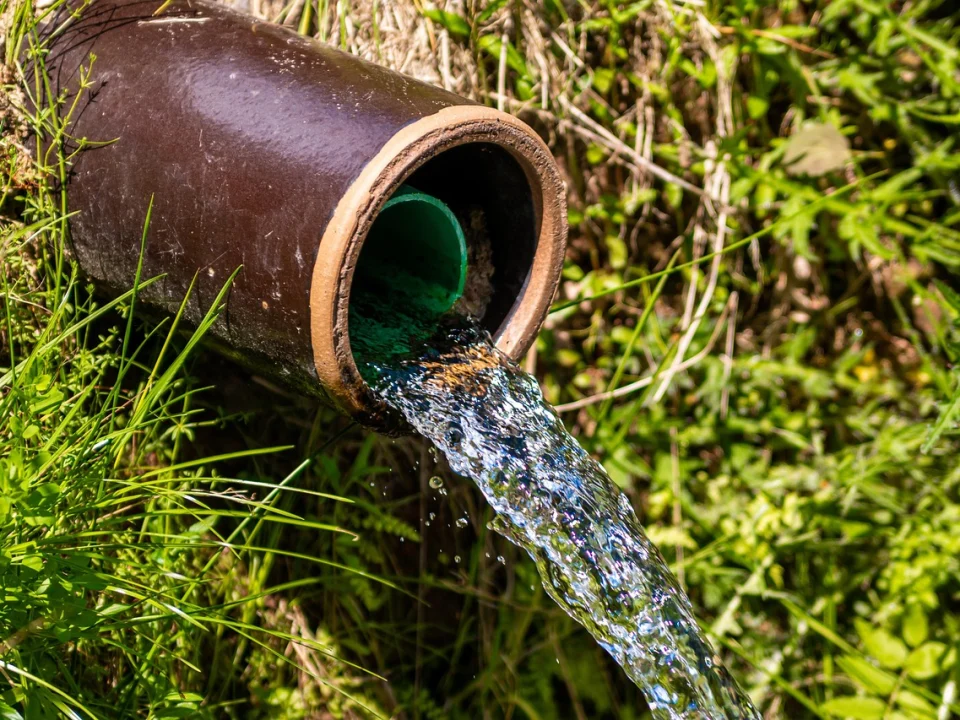
Building Science Corporation says outflow left next to the foundation just recycles through the drain system, and wants it in a storm sewer or dry well away from the house, where your city allows that. Michigan’s guidance (January 2022) prefers returning it to the ground where it can soak in, without affecting neighbors or causing erosion or ponding. We found no national distance, and no national code or maker behind the 20 feet many guides quote.
Don’t send sump water to the sanitary sewer or a floor drain, even when a line freezes, and check with your city. Manville, New Jersey, bans it, and Tyler, Minnesota, charges $100 a month for clear-water violations. The model code’s R105 requires a permit to alter or replace a regulated plumbing system. Whether a like-for-like pump swap counts is local, so ask your building department.
Before you buy a bigger pump
A busy pump is a symptom. A stronger one doesn’t reduce the water. University of Minnesota Extension starts with interior moisture and humid summer ventilation, then grading and gutters, and only then interior or exterior drainage. Building Science Corporation says to look above grade first, and that roof runoff must never feed the foundation drain. Our guide to finding the source of a basement leak walks through it, and the fixes in order pick up from there.
This is general information, not engineering, legal, insurance or medical advice.
Sources checked on 4 November 2026.