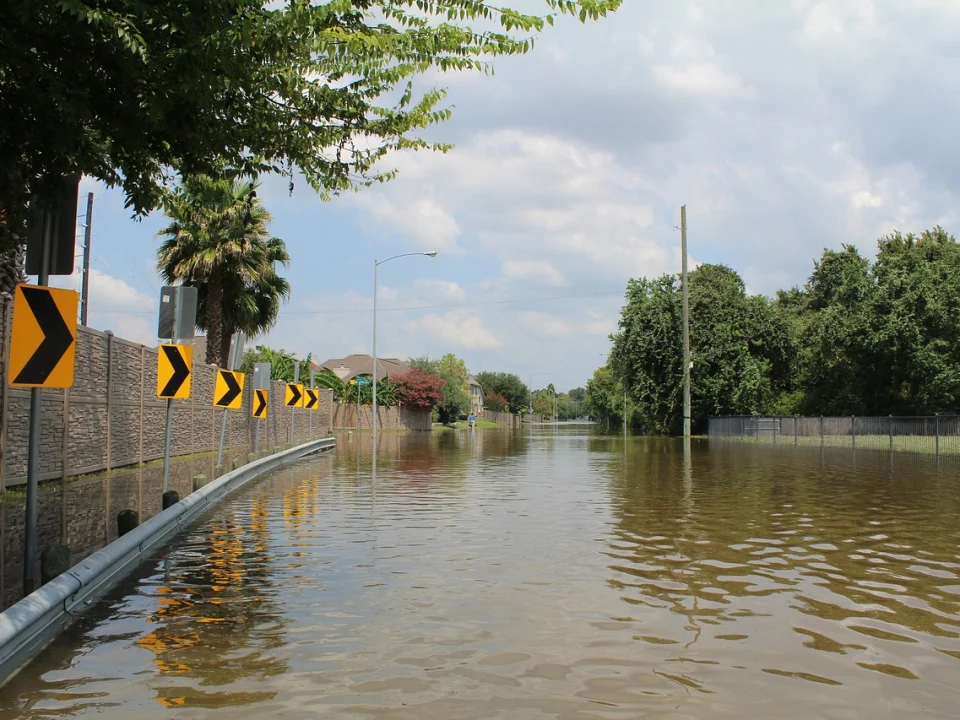
If there is water in the basement now, stay out of it until the power is off. CDC says to use the main switch only from a dry location, and to call an electrician if you’d have to enter standing water to reach it. Then go to what to do first in a flooded basement, which sets out the first two days step by step.
Every page in this section answers the same three questions: is it safe, where did the water come from, and who pays. The second question decides the other two, because the source of the water changes who you call, how you handle it and which insurance clause applies. Lowest Floor sells nothing and refers no one.
The first steps, in order
- Get people out. FEMA’s Urban Flooding guide, written for Cook County, Illinois, says surface water can level with the water outside in minutes, and a collapsed wall can fill a basement in under a minute. If someone is trapped or hurt, call 911.
- Turn off the electricity from a dry spot. If the panel is in the flooded basement, don’t go to it. Iowa Health and Human Services says to call the utility if you can’t do it safely. FEMA says to keep the power off until an electrician has inspected the system.
- Turn off the gas at a valve you can reach without entering the water.
- Check the outside walls. FEMA says not to enter a building that appears damaged, and to ask your local building department for a safety inspection.
- Photograph it, then call your insurer. FEMA puts the photographs first. No photo is a reason to go down.
- Don’t rush to pump. The section on pumping below explains why.
Work out where the water came from
You don’t need to wade in to answer this. Look from the stairs.
| What you see | Likely source | First call |
|---|---|---|
| Water came up through a floor drain, toilet, tub or sink | Sewer backup. Handle it as sewage | Your sewer utility, then a plumber |
| Sump pit full or overflowing, pump silent or can’t keep up | The pump failed, lost power or was overwhelmed | Your insurer, then a plumber if you need one |
| Water poured in through a window, stairwell door or wall in a storm | Surface flooding | Your insurer, and your building department if the walls look wrong |
| Water running from a pipe, water heater or washer hose | Broken plumbing | Close the main water valve if you can reach it without entering the water, then call a plumber |
| Water seeping along the base of a wall or across the floor after rain | Groundwater or surface water finding a way in | Finish the safety steps, then find the source |
More than one of these can be true in the same storm, so write down what you saw and when. The table also can’t tell you the water is clean. None of the agency sources we read gives a look or smell test for sewage. FEMA says flood water and sewer overflows contain bacteria, fecal material and viruses, so plan on that even if the water looks clear.
Why you pump slowly
Iowa’s health agency says water inside the basement helps brace the walls against waterlogged soil outside, and that pumping too soon can do more damage than leaving the water. FEMA says to wait until surface flooding has stopped or dropped below basement level, then pump only 1 foot a day. Iowa says about a third of the water a day. We know of no test that settles which suits your wall.
If a wall bulges, cracks or moves while you pump, stop, get everyone out and call your building department. A horizontal crack in a basement wall goes to a structural engineer.
Water up the floor drain
Treat it as sewage until someone has shown otherwise, and stop using every sink, toilet, shower and appliance in the house, because that water heads for the same pipe. Most city pages we read say to call the sewer utility first, since the crew can see whether the main is the problem, though not every town agrees.
Our guide to a basement floor drain backing up goes through what the drain connects to, what each clue means, who owns which pipe, why plugging the drain can be a bad idea on a city sewer, and what can stop the next one.
When the sump pump failed
Don’t simply get the pump running again. A pump on a float switch empties a basement as fast as it can, far quicker than FEMA’s pace, so a pump that comes back with the power ignores the walls. FEMA also says sump pumps aren’t designed for large amounts of water, so the pump may not be the whole story.
Our page on a failed sump pump and a flooded basement covers how to tell whether the pump really caused this, what to photograph, why to keep the pump for your insurer, and what to ask an electrician before the power goes back on.
Cleanup, mold and the two clocks
Wear rubber gloves, boots, goggles and an N-95, and keep children and pets away, as EPA’s flood cleanup sheet of November 2012 lists. If sewage came in, EPA’s mold guide says to call in a professional with experience in buildings damaged by contaminated water.
Two sets of advice collide here. CDC says to dry everything within 24 to 48 hours or assume you have mold, yet at 1 foot a day, a basement with 3 feet of water still has water in it on day three. No agency we read reconciles the two. Our reading: walls come first, because you can clean mold and you can’t undo a collapse. Then see what EPA says about mold in a basement.
Who pays: the cause decides
Depth and the size of the bill don’t settle a claim. The cause does. This table reads three sample documents, not your policy: a 2000-edition HO-3 homeowners sample, one backup endorsement, and the National Flood Insurance Program Dwelling Form dated October 2021.
| What happened | Homeowners sample | Backup endorsement | Flood policy |
|---|---|---|---|
| A pipe, water heater or appliance inside lets go | Generally covered, but not the failed item itself | Not needed | No |
| Sewer or drain backs up | Excluded | This is what it’s for. Check the limit | Excluded unless a flood in the area is the proximate cause |
| Sump overflows or the pump fails | Excluded | This is what it’s for. The pump itself may not be paid for | Excluded unless a flood in the area is the proximate cause |
| Rain, snowmelt or a river comes in from outside | Excluded as flood or surface water | Stays excluded | Possible if the flood definition is met. Basement limits apply |
| Groundwater seeps through a wall or floor | Excluded | Stays excluded | Excluded unless a flood in the area is the proximate cause |
Three details matter most:
- “Flood” has a set meaning. The form means a general and temporary condition of inundation across two or more acres of normally dry land, or two or more properties, one of them yours. Water in your basement alone doesn’t meet it, however deep.
- Flood cover is narrow in a basement. FEMA’s fact sheet says it’s limited to listed items such as furnaces, water heaters and sump pumps, plus some cleanup. Finished walls and floors and stored belongings aren’t covered.
- Seepage can fall through all three. A slow leak after ordinary rain usually has no policy behind it.
Your policy decides, so ask your insurer in writing. Our page on whether homeowners insurance covers basement flooding reads the clauses one at a time, with the claim deadlines and the questions to ask on a dry day.
Before the next storm
Before you rebuild, work out why the water got in. A basement that flooded from outside can do it again, with new finishes sitting in the same place. You don’t have to sign for a large repair in the first days.
- Cut the water first. Check indoor moisture sources, gutters, downspouts and grading before anything bigger. Our guide to pinning down a basement leak walks through it, and the fixes, in order take it from there.
- If water came through the slab, see water coming through the basement floor.
- Add a warning. FEMA’s home checklist asks whether you have an alarm for high water in the sump. Our sump pump alarm guide covers what one tells you.
- Plan for the outage. FEMA says you’d need battery storage or a generator for a sump pump to run during one. Our battery backup run time calculator shows what a battery can do at your inflow.
This is general information, not engineering, legal, insurance or medical advice. Your insurer, building department, electrician and local health department decide what applies to your home. Figures come from the guides linked above, where each is cited in full. Sources checked on 4 November 2026.