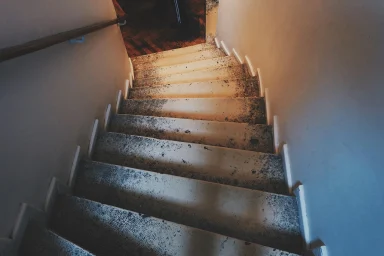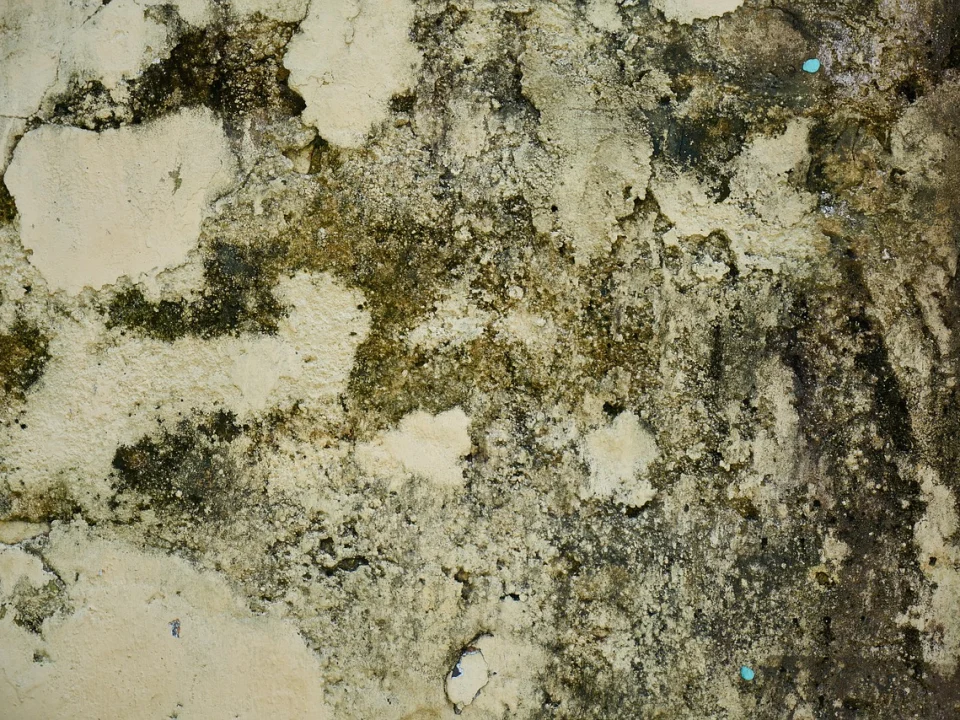
Aim for 30 to 50% relative humidity in your basement. EPA says to keep indoor humidity below 60%, ideally 30 to 50%, and CDC says no higher than 50%. A musty smell, sweat on a wall and a patch of mold all point to moisture, so the work runs in one order: find what is damp, stop the water or humid air reaching it, clean up anything that grew, then hold the air in range.
This page follows that order, with the full guide at each step. Lowest Floor sells and installs nothing and refers no one.
When it’s more than damp
Each of these needs a different response, so check them first.
- Water on the floor. Never enter a flooded basement with the power on. CDC says to turn off the main power only from a dry location, and to call an electrician if you’d have to enter standing water to reach it. Start with what to do first in a flooded basement.
- Rotten eggs, sulfur or garlic. Wisconsin’s utility regulator describes gas odorant that way, and sewer gas can smell similar. If you can’t tell them apart, treat it as gas: leave, and call the gas utility’s emergency number or 911 from a safe distance outdoors.
- Water coming up through a floor drain. Treat it as sewage unless shown otherwise, and read about a floor drain backing up.
- A horizontal crack, or a wall bowing inward. Stop treating this as a smell problem. A structural engineer comes first, and our guide to bowing basement walls explains why.
Ideal basement humidity
The agencies don’t quite agree, so here are their numbers side by side.
| Source | Relative humidity |
|---|---|
| EPA (updated 18 Feb 2026) | Below 60%, ideally 30 to 50% |
| CDC (dated 26 Sep 2024) | No higher than 50% |
| ENERGY STAR (read 4 Nov 2026) | 30 to 50% in general; 30 to 40% in the heating season in colder climates, to prevent window condensation |
| University of Missouri Extension (2018) | 30 to 50% |
A hygrometer, a small gauge that reads relative humidity, tells you where you stand. Put it away from a wall and read it morning and evening for a few days, with the windows shut and again when the smell is worst. ENERGY STAR’s dehumidifier table gives you a yardstick: 50 to 75% describes a space with a musty odor at times, 75 to 90% adds damp spots on walls and floors, and at 90 to 100% walls or floors sweat or seep.
A normal reading doesn’t clear the basement, because the source may be one wet carpet or the back of one wall.
Step 1: find what is damp
When it happens narrows things down faster than sniffing corners.
| Pattern | Points toward |
|---|---|
| Summer, especially with windows open | Condensation. University of Minnesota Extension (UMN) says warm, humid outdoor air condenses on cool basement walls and floors, and many homeowners mistake that for a leak |
| After rain or snowmelt | Liquid water reaching the foundation. Check gutters, downspouts and grading, then the wall and the joint where it meets the floor |
| All year, in one area | A damp material or hidden growth |
| All year, everywhere, no visible water | Moisture moving through concrete, moist air drawn in, or old growth in finishes |
“Dry” usually means no puddles. A basement can show none and still have damp materials: the underside of carpet pad, the back of drywall or paneling, stored cardboard. Our guide to a musty smell in the basement is the place to start. It rules out the smells that aren’t musty, lists where to look, and gives a plastic-sheet test that helps separate humid air from moisture coming through the concrete.
Step 2: fix the cause, in order
UMN says to control the source first and to start with what’s easy and low-cost. Building Science Corporation agrees that many foundation water problems start above grade. A smell or a damp patch doesn’t by itself show that you need a drain, a membrane or a pump.
- Cut interior moisture. Turn off basement humidifiers, vent dryers and bathrooms outside, and insulate cold water pipes.
- Stop airing out with humid air. UMN says not to ventilate directly with warm, humid air. Ventilate on dry days, and if the hygrometer climbs when the windows open, close them.
- Fix gutters, downspouts and grading. UMN says this may solve the problem. The roof runoff calculator shows how much water each downspout carries, and the grading calculator compares your slope with UMN’s figure and the one in the International Residential Code.
- Then consider drainage. If moisture persists, UMN moves on to an interior or exterior system. Our fixes in order explain the options, and our guide to finding the source of a leak traces water that is actually getting in.
Step 3: clean up what grew
EPA gives two jobs: clean up the mold and fix the water. Clean without fixing the water and, EPA says, the mold will most likely come back. A patch under about 10 square feet, roughly 3 feet by 3 feet, is usually one you can do yourself. Above that, or with a lot of water damage, EPA points to its larger guide, written for schools and commercial buildings. Mold or damage from sewage or contaminated water needs an experienced professional.
Before you start:
- Who stays out. CDC says people with allergies, asthma, COPD, lung disease or weakened immunity should not clean mold.
- Bleach isn’t routine. EPA doesn’t recommend biocides such as chlorine bleach as a routine practice. CDC allows it on hard surfaces at no more than 1 cup per gallon of water. Never mix bleach with ammonia or any other cleanser.
- Testing isn’t either. CDC does not recommend mold testing, and EPA says sampling is usually unnecessary if you can see mold.
- Color doesn’t change the plan. CDC says all molds should be treated the same with respect to potential health risks and removal.
Our guide to mold in the basement sets EPA and CDC side by side, with what to throw out, how to clean a small patch, and what to do when mold is behind a finished wall or near the furnace.
Step 4: hold the air in range
A dehumidifier treats the air, not the cause. UMN says it can reduce humidity and odor but is not a permanent or complete solution, and that in a basement with moisture problems it can pull moisture in faster, causing efflorescence, spalling and damage to finishes. So fix the source, then use one to hold the humidity, or use one for a basement that’s damp only in humid months.
Size depends on the space and how damp it is. Under 2,000 square feet, ENERGY STAR’s table gives 20 to 30 pints a day for a slightly to moderately damp space and 30 to 50 where walls or floors sweat. Our dehumidifier size calculator reads the table for your space and estimates running cost at your electricity price.
Sump lids and radon
UMN says warm air rising through a house lowers the pressure in the basement and pulls moist air in through cracks, open sumps and block cores. So an open pit can add to the damp, but the sources disagree on the lid. IRC P3302.1 doesn’t require a gastight cover on a clear-water sump. IRC Appendix BE, which applies only where adopted, calls for a sealed or gasketed lid on sumps open to soil. UMN says sumps should have an airtight cover, and Chicago’s sump pit section, in its sanitary drainage article, requires a gas-tight removable cover. Ask your building department what applies, and keep the pump and float reachable for service.
Radon is a separate question. It has no smell, so fixing a musty basement tells you nothing about it. EPA says the only way to know whether a home has a radon problem is to test for it, and it recommends testing all homes.
What doesn’t fix it
Several popular fixes skip the moisture. EPA says ozone at levels within public health standards doesn’t effectively remove mold, and that inhaled ozone can damage the lungs, so don’t use an ozone generator. Missouri Extension warns that air fresheners mask the odor, which removes a warning sign of mold. EPA and CDC both say not to paint or caulk over mold. UMN says interior coatings are temporary.
How you’ll know it worked
EPA’s finish line is plain: the moisture problem is completely fixed, visible mold and moldy odors are gone, and a return visit shortly after shows no new water damage or growth. EPA calls it a judgment call in the end. Keep the hygrometer running through a humid summer and a wet spring, since those conditions test the fix. UMN says walls must be dry before insulating.
This page is general information, not engineering, legal, insurance or medical advice. Local codes, your building department, a licensed professional and your doctor decide what applies to your home.
Sources checked on 4 November 2026.