A wet basement is sorted by three answers: when the water shows up, where it first appears, and what sits above that spot outside. Those answers separate rain, groundwater, indoor humidity, plumbing and sewer backup, and each of those has a different fix. The two sources this site leans on most point the same way: University of Minnesota Extension (UMN) starts with moisture made indoors, then gutters, downspouts and grading, and only then a drainage system, and Building Science Corporation (BSC) says to look above grade first.
This guide takes you through that sorting and sends you to the page for what you find. Lowest Floor sells and installs nothing and refers no one, so none of it leads to a quote. It is general information, not engineering, legal, insurance or medical advice.
Three things come first
- Standing water with the power on. Do not go in. Iowa Health and Human Services says to shut off the electricity before entering a flooded basement, preferably at the meter, and to call the utility if you can’t do that safely. Then read what to do first in a flooded basement.
- Water coming up a floor drain, toilet or tub. Treat it as sewage unless someone shows otherwise. FEMA’s urban flooding guide lists floor drains, toilets and sinks as the places sewage comes back in. Keep people and pets away and read what to do when a floor drain backs up.
- A wall with a horizontal crack, or one that leans or bows. Call a structural engineer before anyone seals, drains or runs a hose against it. Start with horizontal cracks in a basement wall.
Start with the sorting page
If none of those applies, go to how to find the source of a basement leak. It is the main page in this section, with two tables to read your leak against and four checks that cost little or nothing: walking the outside in a real rain, a plastic sheet taped to the wall, a water meter reading, and a hose test. Keep a dated log as you go: two storms’ worth of notes gives an engineer or contractor more to work with than one dry-day visit.
Timing is the cheapest clue, though neither UMN nor BSC publishes a timing chart. This short version is our reading of how each source of water behaves. It points you to a next check and doesn’t settle anything on its own.
| When it happens | Points toward |
|---|---|
| During rain or soon after, stopping when the weather clears | Roof or surface water reaching the soil against the wall |
| For days or weeks in wet seasons | Rising groundwater. UMN says the water table can rise with flooding or the seasons |
| All year, even in dry spells | Groundwater or a plumbing leak |
| On humid summer days with no rain, on cool walls and floors | Condensation. UMN says many homeowners take this for a leak |
For the where, find the first wet spot and not the puddle. Water runs along the floor to the lowest point, so a puddle is often far from the way in.
Then read the page for your leak
It only happens when it rains
Read water in the basement after heavy rain. It covers the basement that stays dry until a big storm, with a walk-around list for the next one. FEMA’s home checklist says the same: next time it rains, watch where the runoff goes.
It comes through or down a wall
Read where a leaking basement wall lets water in. Walls leak at a short list of places: the joint with the floor (installers call it the cove joint), a crack, a form-tie hole, block mortar joints, a pipe opening or a window well. Where the water shows tells you its way in, but not why water is sitting against the wall, and that part of the answer is often found outside. If the line in the wall is a crack, the cracks and walls guides explain what a crack can and can’t tell you.
It seems to come up through the floor
Read water coming through the basement floor. Condensation, a plumbing leak, a backed-up drain and a wall leak can all look the same on a floor, so that page starts by proving the water really comes from below. If you have a sump, the pit is the one place you can see below your floor. It also explains what each drainage system can and can’t reach.
It’s damp, but nothing is running
A film on a wall or a musty smell may not be a leak at all. Natural Resources Canada gives a test: tape up a sheet of plastic about 40 inches square for a day or two. Water on the room side means high indoor moisture, and water on the underside or a color change on the concrete means moisture from the ground. The damp, mold and air guides pick it up from there.
The sump pit is overflowing
An overflowing pit means water is reaching it faster than it’s leaving. UMN notes that the pump can fail and that drain tile can clog or collapse. Stay clear of the water if the pump is plugged in, and go to the sump pump guides.
Three ways a basement gets wet
It helps to know which of these you’re dealing with, because they call for different fixes.
- Pressure. Water collecting against a foundation pushes through “any available joints, imperfections, or cracks”, in BSC’s words. Under the slab, gravel that isn’t connected to the drainage system can build pressure and flood through joints in the floor.
- Wicking. UMN says water is drawn up through small pores in the footing and slab, leaving a ring of dampness at the base of a wall, and that this is very common at cold joints. You get a damp band and no running water.
- Condensation. Warm, humid outside air condenses on cool concrete. Nothing has come through the wall at all.
Most walls aren’t built to hold back standing water. The 2024 International Residential Code, a model code your state or city may have changed, calls for dampproofing in general and waterproofing only where a high water table or severe soil-water conditions are known (R406.1, R406.2). BSC says dampproofing typically can’t withstand significant water pressure. UMN adds that many existing houses have no subsurface drain at all. So it pays to keep water away from the wall, and a roof gathers a lot of it: UMN says a 1-inch rain puts about 1,250 gallons on a 2,000 sq ft roof.
Fix it in the right order
UMN’s advice is to do the easy, low-cost things first and control the source of the water. BSC says that without first fixing surface problems, correcting a wet foundation “might be futile”. UMN’s steps:
- Remove or vent indoor moisture sources.
- In summer, stop ventilating with humid outside air.
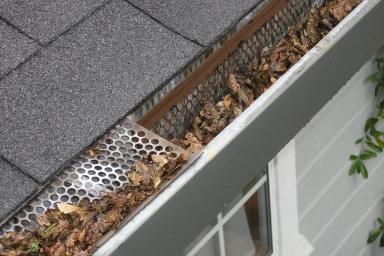
- Correct gutters, downspouts and grading. UMN says this may solve the problem.
- If the problem persists, add an interior or exterior drainage system.
A bowed wall or a horizontal crack goes to a structural engineer before any of this. And the order has an honest limit: BSC says groundwater problems can still occur on a well-graded, well-drained site, so step 3 may not be the end of it.
The gutter and grading numbers differ by source. The IRC calls for at least 6 inches of fall in the first 10 feet (R401.3), while UMN asks for at least 1 inch per foot for at least 6 feet, and for downspouts to discharge at least 4 feet beyond the wall. Our foundation grading calculator compares your measured drop with the published figures, and the roof runoff calculator shows what your roof sheds. The fixes in order take each step from there.
Two common purchases aren’t first steps. UMN calls interior coatings temporary, because the water stays, and says a dehumidifier can draw moisture in faster in a basement with a real water problem.
Before you pay anyone
Installers may be right about your basement, but the firm that inspects is often the firm that sells, so its inspection isn’t independent. Ask any installer what the cause is, in writing, what they checked to find it, what they found at the gutters and grading, and what the guarantee excludes.
You may see figures such as “98% of basements” on sales pages. As of November 2026, we looked for a study behind them and didn’t find one. That doesn’t prove they’re wrong, but we don’t use them.
If there’s damage, photograph everything before you clean. Whether a policy pays depends on the cause of the water, and seepage, a sewer backup and a flood can each be treated differently. Your policy decides, so ask your insurer in writing. The floods, backups and insurance guides go through it.
Sources checked on 4 November 2026.